
About the ETC System in Japan
Learn how Japan's Electronic Toll Collection system works, its history, and how it benefits drivers across all toll road networks.
ETC Toll Road
Pass Through Toll Gates Smoothly
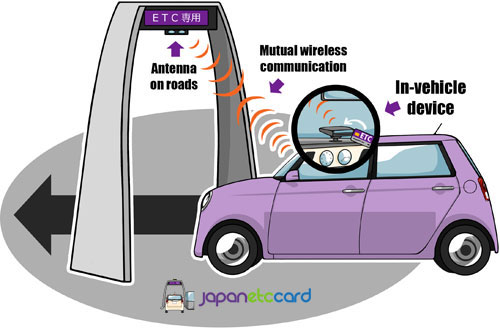
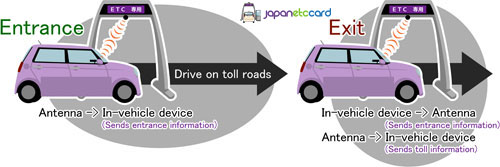
The Electronic Toll Collection (ETC) system allows drivers in Japan to pay highway tolls automatically without stopping. It uses wireless communication between a vehicle-mounted ETC device (OBE) and antennas at toll gates.
ETC cards, issued by credit card companies, are inserted into the in-vehicle unit to enable this functionality.
Background and Development of ETC
As Japan's motorized society grew, so did traffic congestion—especially on toll roads. Initially, road widening was used to reduce congestion, but this soon reached its limits. The ETC system was developed to offer a smarter, more efficient solution for toll collection and traffic flow.
Development began in 1993, and today, ETC is implemented on nearly all toll roads nationwide.
Nationwide Compatibility
Despite Japan's toll roads being operated by multiple companies with different fee structures (flat and distance-based), the ETC system is unified across the country. Drivers can use their ETC cards and units seamlessly anywhere in Japan.
How It Works
As your vehicle approaches a toll gate:
Insert the ETC card into your vehicle's onboard ETC device.
ETC antennas at the gate detect the signal and process the payment.
The gate opens automatically as you pass through (~20 km/h).
The toll is charged to your credit card after use.
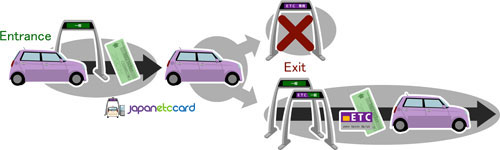
At Entrance
Antenna → In-vehicle device: Sends entrance information to record your entry point.
At Exit
In-vehicle device → Antenna: Sends entrance information, then receives toll calculation.
Less Stress & Eco-Friendly Driving
Eliminating the need to stop at toll booths not only reduces driver stress but also contributes to better fuel efficiency and environmental protection.
Improved Fuel Efficiency
No repeated stop-and-go at toll gates means better gas mileage.
Lower Emissions
Reduced CO₂ emissions and less noise pollution near toll booths.
Sustainability Goals
Supports Japan's national sustainability and climate goals.
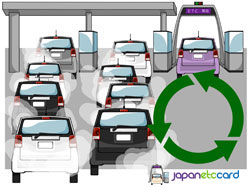
Pass Through Smoothly
The greatest benefit of ETC is that vehicles can pass smoothly through toll gates without the need to stop and make payments manually.
In addition to preventing traffic jams, drivers do not have to waste time making payments or preparing exact change.
Tip: Always ensure your ETC card is properly inserted before approaching the toll gate.
Why Traffic Jams Happen
Traffic Jams on Toll Roads
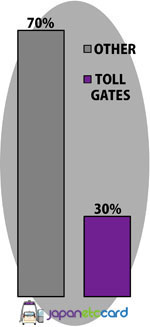
According to NEXCO research, many traffic jams occur at toll gates where vehicles are required to stop for payment. These short stops cause major bottlenecks, especially during peak hours and holiday travel.
With ETC in place, vehicles can keep moving, reducing delays and improving overall traffic flow. Over the past decade, the spread of ETC has played a significant role in minimizing traffic congestion on Japan's highways.
Did you know? Traffic data shows that approximately 30% of highway congestion occurs at toll gates. ETC helps eliminate this bottleneck entirely.
Less Stress Driving
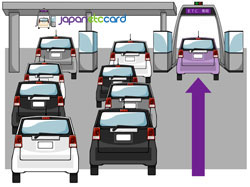
ETC allows for a more relaxed driving experience. No more fumbling for cash, no more stopping at busy toll booths, and no more worrying about having exact change.
Simply drive through the ETC lane at a reduced speed and let the system handle the payment automatically.
Benefit: Reduce fatigue on long journeys by eliminating the stress of toll gate transactions.
Skip the Lines with ETC
While other vehicles queue at cash toll booths, ETC users breeze through dedicated lanes.
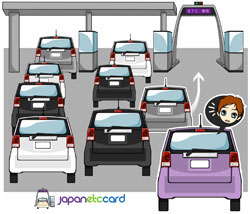
Why Use ETC in Japan?
Save Time
No stopping at toll booths means faster travel, especially during busy periods and holidays.
Save Money
ETC users get discounts of up to 30-50% during off-peak hours and on certain routes.
Less Stress
Smooth, non-stop driving through toll gates reduces fatigue on long journeys.
Track Usage
Get detailed reports of your highway usage, toll costs, and driving history through your dashboard.
Join 18,000+ customers enjoying stress-free highway travel in Japan